Total Pageviews

Dec 19, 2016

Big bill doesn't hamper dexterity

Photo by Willem Kruger
WYellow-billed HornbillW
Ceratogyymna elata
Using the ends of it huge beak, like forceps, this hornbill picks up termites, flicks them into the air and then swallows them.   The bird was foraging along a railroad track in South Africa's Kgalagadi Transfrontier Park.   It became so intent on dining on termites, that it gradually worked its way to within 19 ft. (6 metres) of photographer Willem Kruger, who was sitting in his vehicle, camera at the ready.
Please comment if you wish.
BarrytheBirder 

Dec 18, 2016

Graceful Great Egrets

Photo by Zsolt Kudich
Glorius Great Egrets (Casmerodius alba alba) take flight in a swamp in Hungary in a photo entry to the 'Action' category of the 2016 National Geographic Nature Photographer of the Year competition.
Please comment if you wish.
BarrytheBirder

Dec 17, 2016

Sunset near Lietzow ~ north-eastern Germany

Photo by Jens Buttner / AFP / Getty Images
Grebe amongst swans at dusk
Lietzow is located on the island of Rugen, at the north-eastern tip of Germany, and at the foot of the Baltic Sea.   Nearby to Lietzow, is Germany's smallest, but perhaps most picturesque national park: Jasmund Nationalpark with its huge coastal chalk cliffs.   As mentioned in this spot about two weeks ago, Germany's national bird is the Golden Eagle.
Please comment if you wish.
BarrytheBirder

Dec 16, 2016

A most beautiful blue bird...

Photo by Tim Zurowski / BIA / Minden / Alamy
Red-legged Honeycreeper
Cyanerpes cyaneus
Female - photo by Doug Jansen
The Red-legged Honeycreeper is common throughout South and Central America, which is immensely fortunate for hundreds of thousands of birdwatchers, because this bird is one of the most strikingly coloured birds in the world.   It is small, like a tanager, but the male is violet-blue with a turquoise head, black wings, tail and back, and the underwing is lemon yellow (seen in flight).   It feeds on insects, some fruit and nectar, hence the name honeycreeper.   It is widely regarded in South America, in the way the Eastern Bluebird is admired in North America.

Please comment if you wish.
BarrytheBirder 

Dec 15, 2016

Back from the brink...

Photo by Alistair Homer / RSPB / PA
Montserrat Oriole ~ one of world's rarest birds
Icterus oberi
The Montserrat Oriole, one of the world's rarest birds, has been brought back from the edge of extinction.   It is no longer critically endangered, according to the latest Red List of Threatened Species issued by the IUCN (International Union for Conservation of Nature).   The bird species has been moved to the lower-risk category 'vulnerable to extinction'.
Please comment if you wish.
BarrytheBirder

Dec 14, 2016

Jackal comes close to capturing sandgrouse

Photo: Greatstock / Barcroft Images
Cubitje Quap waterhole
A jackal is just inches away from seizing a plump sandgrouse at a waterhole in the Kgalagadi Transfrontier Park on the Botswana/South Africa border.   The waterhole is a well-known site for jackals to catch birds.
Please comment if you wish.
BarrytheBirder

Dec 13, 2016

Chickadees ~ winter's warriors

Photo by Barry Wallace
I wonder if chickadees know that
I need them as much in winter 
 as they need me?
Please comment if you wish.
BarrytheBirder

Learning about Black Swans

Photo: Hayden's Animal Facts
Cygnus atratus
Today I learned a few things about this beautiful black bird I never knew before.   For starters, Black Swans are native to Australia.   They were introduced to Britain in 1791 as splendid additions to captive wildfowl collections, but inevitable escapes and deliberate releases meant that they are now nearly a self-sustaining population in the wild.   They are found now in captivity all over the world.   I have seen captive ones up close here in Canada, but I have never heard of wild ones in this country.   Never having seen one in flight, or flapping its wings, I did not know that the Black Swan's flight feathers are white!
Please comment if you wish.
BarrytheBirder

Dec 12, 2016

Canadian Geographic 2016 photo contest winners

Photo by Tim Hopwood
Pygmy Owl and vole prey
First Honourable Mention

Go to canadiangeographic.ca to see all the winners of the 2016 Canadian Wildlife Photography of the Year Competition.   The competition was conducted by Canadian Geographic magazine on behalf of the Royal Canadian Geographical Society.   Some of the winning photos also appear in the 'Special Wildlife Issue' of Canadian Geographic's  December magazine issue, currently on newsstands. 
Please comment if you wish.
BarrytheBirder

Dec 11, 2016

How do they do it?

Photo by N. Camilleri / Lund University / PA
Researchers in Europe have stated that observations of Common Swifts during winter months are scarce and that roosting sites have never been found in sub-Saharan Africa. Now, swifts have been equipped with accelerometers and results show that swifts never seem to stop flying, with birds airborne for 99% of the time during their 10-month non-breeding period.
Please comment if you wish.   
BarrytheBirder

Dec 9, 2016

Those unmistakable big dark brown eyes...

Photo by Cathy Scharge
BARRED OWL
Strix varia
I attended a community potluck supper this week and sat across from a neighbour, named Ed Millrr, who is an avid hiker.   Ed mentioned being out with a group of fellow hikers recently, several kilometres east of our village of King City, when they came across the beautiful Barred Owl you see above.   Great sighting of a great bird and nice photo by Cathy Scharge.
Please comment if you wish.
BarrytheBirder

Dec 8, 2016

Hummingbird migration ~ adults versus juveniles

Photo by BarrytheBirder
Henry Nicholls writes in The Guardian Online this week that migration-based research shows Ruby-throated Hummingbirds adopt a mixed strategy regarding pre-migration feeding habits.   Some adults choose to fatten up in North American before heading to Central America wintering grounds, by gorging on feeders to increase their body mass by more than one third.   Juveniles do not appear to do this, so probably fall behind as they stop and feed along the way.   In my Ontario backyard, all the 'hummers' leave on southern migration at the same time, usually within a 24 to 48 hour period.   I find it difficult to distinguish between a well-fed adult bird and a partially nourished juvenile.   During the migration, the adults indubitably leap-frog ahead of the juveniles, which stop to nourish themselves as required.
Please comment if you wish.
BarrytheBirder

Dec 7, 2016

Dubai city becomes outdoor art gallery

 Photos by Tom Dulat / Getty Images
Birds among popular mural images
Dubai City is being transformed by huge art murals painted on buildings across the city, as part of the 'Dubai Street Museum' an initiative promoting the emirates' visual arts and cultural heritage.   Dozens of murals are already in place and there could be hundreds eventually, as the city's streetscapes are dramatically and colourfully transformed.


Please comment if you wish.
BarrytheBirder

Dec 6, 2016

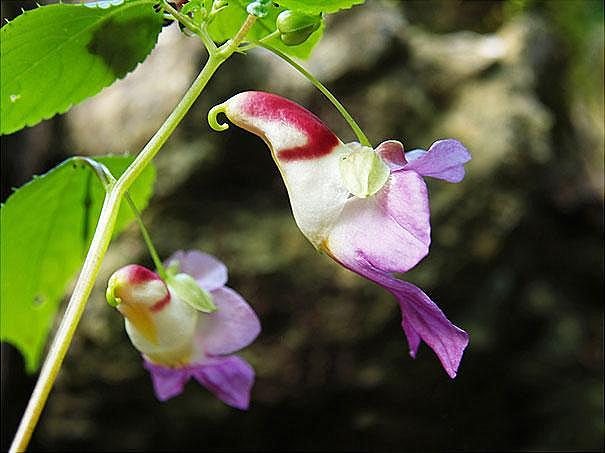
Flying flowers

 White Egret Orchid
(Habenaria radiata)

Flying Duck Orchid
(Celeana major)
 Parrot flower
(impatiens psittacina)

Dove Orchid
(Peristeria elata)
Please comment if you wish.
BarrytheBirder

Dec 5, 2016

No excess too great

Photo: History in Orbit
Short-cut to over-killing
In what can only be described perhaps, as a super-long blunderbuss, this real gun was used in commercial waterfowl hunting in the late 1800s and early 1900s.   They were called 'punt guns' because they were used in a type of boat called a punt.   One of these guns could fire almost a pound of shot and could kill 50 birds in one blast.   In order to maximize the count, 10 punt guns would be fired simultaneously in the name of efficient enterprise.   Not surprisingly, they devastated wild bird populations and were subsequently outlawed.
Please comment if you wish.
BarrytheBirder

Dec 4, 2016

Paper birds flutter for real birds

Photo by Juan Carlos Hidalgo / EPA

Above, a woman walks through paper birds placed by World Wildlife Fund activists opposite Spain's lower house in Madrid, on Novemeber 24, to demand greater protection of Donana National Park in Andalusia, southern Spain.   The park is home to thousands of European and African migratory birds, fallow deer, Spanish Red Deer, wild boars, badgers, mongooses and endangered species such as the Iberian Lynx and the Spanish Imperial Eagle (pictured at left).   The eco-systems of these creatures are under constant threat by the draining of marshes, the use of river waters to boost agricultural production by irrigating land along the coast, water pollution by up-river mining, human encroachment and the expansion of tourist facilities, loss of habitat and illegal poisoning.
Please comment if you wish.
BarrytheBirder

Dec 3, 2016

World's most common wild bird

Photo by Lee Ouzman
1. There are 1.5 billion breeding birds of this species.
2. It is part of the weaver family.
3. They are sparrow-sized with brown bodies and red bills.
4. They are found in sub-Sahara Africa.
5. They are very social and flocks can be in the millions.
6. They feed on seeds and can cause serious crop damage.

Meet the Red-billed Quelea
(Quelea quelea)

Please comment if you wish.
BarrytheBirder

Dec 2, 2016

The charcoal chicken

 Photos: Imgur
An all-Black Chicken
(Ayam Cemani)
Here's a bird that popped up all over the place this week, thanks to photo news service providers around the world.   It's nothing new, but the reaction to the photos would make one think this chicken is the first of its kind in the world, one never seen before.   The all-black Ayam Cemani chicken, from Indonesia, has a dominant gene that causes hyperpigmentation (Fibromelanosis), making the chicken entirely black; including its feathers, beak, skin, legs and internal organs.   Ahhh, but what about its blood you ask.   Its blood is red.   Ayam translates as 'chicken' in Indonesia and Cemani seems to translate as two things.   On one hand, Cemani is Javanese for 'completely black'.   On the other hand, Cemani denotes the village of origin for the bird on the island of Java.   Speculation is that the breed originated from Java, in Indonesia, and has probably been used for centuries in mystical and religious rites.   The Cemani Chicken is sometimes called the Lamborghini of chickens.   Prices outside of local Javan villages are reported to be as high as $2500 per bird, which aficioandos have apparently offered.   Premiums can be paid for chickens with magical 'black' blood, but such a thing would appear to be achieved only by adding things like like charcoal or squid ink to the bloodstream.   One report states that more than 25 avian breeds with fibromelanosis are known and almost all of them originate from southeastern Asia.   Ho hum.
    

Please comment if you wish.
BarrytheBirder


Dec 1, 2016

National Geographic 2016 photo finalist


Prehistoric aura to gannet photo
This photo is one of the category finalists in the 2016 National Geographic Nature Photographer of the Year contest.   Northern Gannets fish by diving into the sea and can do it from heights of 30 metres and at speeds up to 80 km/hour.   They are the largest sea birds in the North Atlantic and pursue their prey underwater.   This particular photo caught my eye by the dark, overbearing, violent presentation of what is happening here.   I see an almost prehistoric aspect in this scene.   Captivating, indeed.
Please comment if you wish.
BarrytheBirder

Nov 30, 2016

2016 Wildlife Photographer of the Year Contest

Photo by Victor Tyakht
Rainbow wings
The Bird's wing acts as a diffraction grating - a surface structure with a repeating pattern of ridges or slits.   The structure causes the incoming light rays to spread out, bend and split into spectral colours, producing this shimmering rainbow effect, captured here by Victor.   This photo is one of 25 images chosen by the UK's Natural History Museum for its 2016 short list of Wildlife Photographer of the Year candidates.   The people's choice winning photo of the year will be determined after January 10, 2017.
Please comment if you wish.
 Barry Wallace